Mumbai ki subah hamesha thodi impatient hoti hai. Local train ka screech, road pe rickshaw ka horn, ande-pav ki smell, aur hawa mein chipchipa sa humidity—jaise city bhi bina permission ke tumhari skin se chipak jaati ho.
Us din meri body ne bhi mujhe bina permission ke ek announcement de diya tha.
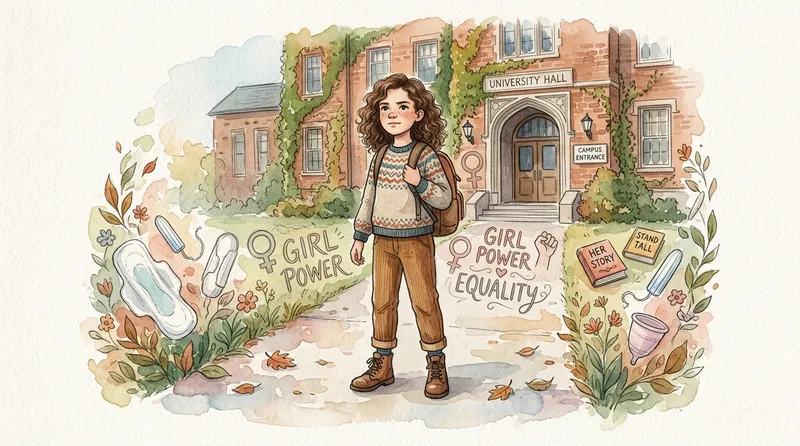
Main girls’ washroom ke last stall mein khadi thi, dono haath peth pe rakhe hue, aur saans ko normal dikhane ki acting kar rahi thi. Period ka first day. Hamesha ka same insult, but har baar naya experience jaise. Lower back mein kheench, thighs mein dull ache, aur dimag mein ek heavy fog. White shirt aur navy skirt pe ek extra layer ka stress—kahin kuch visible toh nahi, kahin stain toh nahi, kahin smell toh nahi. Period ke dino mein kapde kapde kam aur surveillance zyada lagte hain.
Mirror ke saamne ek girl apni eyeliner theek kar rahi thi. Do girls side mein khadi gossip kar rahi thi.
“Attendance lagegi kya aaj?”
“Arre, professor ko batao toh bolte hain, ‘College mein professionalism chahiye.’”
Maine stall ke andar se yeh suna aur ek strange, achanak se gussa andar uth gaya.
Professionalism.
Jaise blood, cramps, nausea, weakness—yeh sab koi mood board pe choose kiya gaya aesthetic ho.
Main 19 ki hoon. Second year. And still, period ke dino mein mujhe aisa feel hota hai jaise meri body mujhe hi corner mein khada kar ke bol rahi ho: aaj tumhara din nahi hai. Aaj tumhari marzi secondary hai.
Maine apna face wash kiya. Aankhon ke neeche shadow thi. Chehra thoda pale. Aur us reflection mein mujhe sirf pain nahi dikha—mujhe unfairness dikha.
School mein kabhi kabhi mummy “tabiyat theek nahi” bol ke chhutti nikalwa deti thi. College mein? College mein sabko lagta hai tum “adjust” kar loge. Jaise body ka pain ek administrative inconvenience ho.
Stall ka door kholte waqt mere andar ek line clear ho gayi.
Why is this still normal?
Main bahar nikli. Bas ek second ke liye bathroom ke sink ke saamne ruk kar maine khud se quietly kaha, “Nahi. Yeh normal nahi hai.”
Aur usi din se mere dard ke saath ek aur cheez start hui—fight.
The Petition
College ke canteen mein lunch time pe hamesha ek controlled chaos hota tha. Steel ke glasses, half-eaten vada pav, nimbu paani, notebook pe doodles, breakup discussions, intern ki tension, aur kisi corner mein kisi ka loud laughter.
Main aur Ananya corner wali table pe baithi thi. Ananya meri bestie thi aur honestly meri sabse necessary contradiction. Main aag thi, woh brake. Main pehle bol deti thi, woh pehle sochti thi. Main har cheez ko moral clarity mein dekhna chahti thi; woh uske fallout ko bhi dekh leti thi. Isi liye hum best friends the—because she could hear my fire without trying to extinguish it.
Acchhi Lagi Kahani? Apne Doston Se Share Karna Na Bhoolen! 💖
Neeche points:
- health
- dignity
- attendance flexibility
- confidential self-declaration
- no academic penalty
Ananya ne notebook dekha aur ek slow, suspicious look diya. “Tu seriously karne wali hai.”
“Main mazaak mein itna neat handwriting nahi karti,” maine bola.
“Tu mazaak mein bhi aise behave karti hai jaise election campaign kar rahi ho.”
Mujhe hansi aa gayi, par phir main serious ho gayi. “Ananya, I’m done pretending this is a small thing.”
Woh thoda chup rahi. “Mujhe problem issue se nahi hai. Mujhe problem backlash se hai.”
“Backlash toh aayega.”
“Exactly.” Usne straw ghumaya. “Attention-seeking bolenge. Feminist drama. Special treatment. Tum samajh rahi ho na?”
“Main samajh rahi hoon. Aur let them.”
Ananya ne mujhe dekha, almost helplessly. “Myra, tumhari himmat pe mujhe kabhi doubt nahi hota. Bas administration ko ‘let them’ se farq nahi padta. Unke liye har cheez precedent hoti hai. Woh bolenge—kal migraine, kal mood off, kal class nahi aane ka excuse.”
“Period migraine se alag hai,” maine turant bola. “It’s a predictable biological cycle. Excuse nahi.”
“Main jaanti hoon,” woh softly boli. “Main bas bol rahi hoon ki unki language mein baat karni padegi.”
Uski baat sahi thi. Yeh uska style tha—problem ko dilute nahi karti thi, bas uske around ek workable bridge bana deti thi.
Usi waqt Kabir table ke paas aaya. Third year ka boy, economics ka, calm as if duniya uske shoulders pe noise nahi daal paati. Boys mein aise log rare hote hain jo “bro chill” bolke kisi serious cheez ko trivialize nahi karte. Kabir listen karta tha. Aur phir practical help deta tha.
Usne notebook dekha. “Petition?”
“Yep,” maine bola.
Kabir ne seedha seat khinch ke baith gaya. “Good. Kaafi time se hona chahiye tha.”
Ananya ne usko side-eye diya. “Tum sach mein support karoge? Ya bas intellectual sympathy?”
Kabir hansa, bina offended hue. “Support karunga. Data bhi. Agar tum log chaho toh main other colleges ki policies, medical references, aur attendance rules ka comparison nikaal sakta hoon.”
Maine uski taraf dekha. “Exactly what we need.”
Kabir ne calmly add kiya, “Aur issue ko ‘girls special treatment’ ke frame mein mat rakho. Usse log defensive ho jaate hain. Campus health policy bolo. Accommodation bolo. It sounds like welfare, not privilege.”
Ananya ne first time thoda relax karke chai ka glass neeche rakha. “That actually makes sense.”
Maine pen uthaya. “Then let’s start.”
Uske baad humne canteen aur corridor mein students se baat karni shuru ki. Simple ask tha: sign the petition, share your experience, say this out loud.
Pehli sign ek girl ne ki. Bina kuch bole. Bas pen liya aur naam likh diya, jaise ye uske liye koi permission slip ho.
Phir ek dusri girl ne aankhen neeche rakhe hue kaha, “Mere cramps bahut severe hote hain. Main class mein baithti hoon toh bas pray karti hoon ki teacher notice na kare.”
Ek first year girl ne whisper kiya, “Meri attendance low ho gayi thi kyunki main faint ho gayi thi. Professor ne bola, ‘Excuses bahut ho gaye.’”
Boys ka response mixed tha. Kuch curious the. Kuch awkward. Kuch ne immediately us kind of smirk diya jo insaan ko bata deta hai ki woh discomfort ko joke banana chahta hai.
Ek boy ne pucha, “Par agar chhutti mil gayi toh misuse nahi hoga kya?”
Maine uski taraf dekh ke bola, “Haan, because log fever ka misuse kabhi nahi karte. Medical leave ka misuse kabhi nahi hota. Is logic se toh koi policy kabhi exist hi nahi karegi.”
Kabir ne bina tone badle add kiya, “Misuse ka risk har welfare policy mein hota hai. Uska solution policy ko reject karna nahi hota. Solution safeguards hote hain.”
Ananya, jo pehle itni loud nahi hoti thi, us din ek point pe khud bol padi jab ek senior boy ne hansi mein kaha, “Yeh sab attention ke liye hai na?”
Uski awaaz thodi kaanp rahi thi, but she stayed there. “Nahi. Yeh isliye hai kyunki kuch log har mahine pain ke saath class attend karte hain aur usko joke samjha jaata hai.”
Mujhe us pal us par itna pyaar aaya ki kuch bol hi nahi paayi.
Do din mein kaafi signatures aa gaye. Utna nahi jitna mujhe chahiye tha, par enough to formally take it up.
Maine socha tha issue simple hoga. Reasonable demand, reasonable people. Bas thoda push.
Mujhe nahi pata tha ki system ko facts se zyada apni language pasand hoti hai.
Principal’s Office
Principal Dr. Deshmukh ka office college ke old wing mein tha—wooden desk, framed certificates, aur cupboard mein trophies aise arranged jaise discipline ka museum ho. Khidki se jacaranda trees dikh rahe the, but andar hawa bilkul stale thi.
Hum char log gaye the: main, Ananya, Kabir, aur student council ki ek quiet support karne wali girl. Principal ne spectacles adjust kiye aur polite smile ke saath bola, “Boliye.”
Polite. Aur already closed.
Maine petition unke saamne rakha. “Sir, hum period leave policy request kar rahe hain.”
Woh paper dekhne lage. “Hmm.”
Kabir ne measured tone mein start kiya. “Sir, many colleges have some form of menstrual accommodation. This is based on student feedback and health concerns. It’s not about lowering standards—”
Principal ne haath uthaya. “One minute. College academic discipline ka place hai. Agar hum har physical inconvenience ke liye leave dene lagenge, toh fairness kahan rahegi?”
My jaw tight ho gayi.
“Sir,” maine kaha, “periods physical inconvenience nahi hote. For many students, they’re painful and sometimes debilitating.”
Woh thoda sa smile kiya, almost patronizing. “I am not denying biology. I am saying equal treatment is important. If we create a separate rule for one group, then will it not become inequality?”
Acchhi Lagi Kahani? Apne Doston Se Share Karna Na Bhoolen! 💖
Ananya ka pair neeche se hil gaya. Kabir chup raha, because he knew if I got interrupted now, I’d explode.
Maine breath liya. “Equal treatment and identical treatment same nahi hote, sir.”
“Hmm,” he said, leaning back. “The trouble with such demands is that they are emotionally driven. Today you ask for leave. Tomorrow someone will ask for exemption because she feels low. Discipline will collapse.”
Mujhe wahan pe samajh aa gaya ki woh sirf disagree nahi kar rahe. Woh define kar rahe the ki kya serious hai aur kya nahi. Power ka original game yahi hota hai—sirf no bolna nahi, no bolne ka language control karna.
Kabir ne fir se calmly bola, “Sir, this can be a limited, self-declared accommodation. Confidential. With safeguards. It’s not about random absenteeism.”
Principal ne chair mein thoda adjust kiya. “And what about parents? Management? Reputation? People will say we are encouraging excuses.”
My hands lap mein tight ho gaye. Reputation. Always the invisible audience, always women ke bodies pe public opinion ka board.
He continued, “The college has a reputation for rigor. I cannot approve something that may be misused and later blamed on administration.”
I looked at him. “So because someone might misuse it, everyone else should suffer?”
He didn’t answer immediately. Phir woh wahi same soft, almost kind tone mein bola jo actually condescending hota hai.
“Myra, you are passionate. That is admirable. But passion must be tempered by institutional reality.”
Institutional reality.
Jaise pain koi spreadsheet mein fit hone wali cheez ho.
Mujhe gussa aaya. Real gussa. Par us office mein main samajh gayi thi ki sirf loud hone se kuch nahi hoga. Power noise ko absorb kar leti hai, par contradiction se discomfort hota hai.
“Sir,” maine slow, clear voice mein bola, “standardization is easy when the standard body is male.”
Room mein ek second ke liye silence ho gaya.
Ananya ne ek shallow breath li. Kabir ne mujhe side glance diya—warning nahi, respect ke saath tension.
Principal ka face still tha. “Careful with your words.”
“I am careful,” I said. “Because the issue is not comfort alone. It’s dignity. Some students come to class bleeding through painkillers. Some skip lectures and get punished. Some suffer in silence because the campus culture makes them feel weak or dramatic. If this college can accommodate sports events, cultural rehearsals, election duty, internships—then why not a predictable health need?”
He folded his hands. “You are making a moral argument.”
“Yes.”
“And policy cannot be based on sentiment alone.”
Kabir tried again. “Sir, other institutions have pilot models. Two days per semester. Self-declared. No academic penalty. It can be reviewed.”
Principal looked at him, then at me. “If we do this, there will be pressure from management. They will ask whether this opens the door to misuse.”
I felt that familiar rage come back, but now it had edges. “And if there is misuse, sir, shouldn’t you regulate the misuse instead of denying the need?”
He gave that adult look. The one that says you’re young, you don’t understand institutions.
“Passion is good,” he repeated. “But institutions run on reality.”
We left with no approval. Not even a half-promise. Just “send a formal proposal” and “we will consider.”
Corridor mein nikalte hi meri chest mein aag thi.
Ananya exhaled first. “Okay. That was worse than I expected.”
Kabir rubbed his forehead once. “He’s not stupid. He’s just protecting the status quo.”
“I know that,” maine almost snapped. Phir voice low ho gayi. “But why does he talk like women are a liability?”
Ananya looked at me, and this time there was no caution in her face. Sirf understanding. “Because a lot of men have never had to sit with this pain.”
Kabir said, “We need another route.”
I wanted to say I knew that. But honestly, I was too angry to admit how much that office had shaken me. Not because he said no. Because he said no so smoothly, as if my body was a minor administrative issue.
Us raat main ghar gayi toh Maa kitchen mein thi, onions kaat rahi thi, TV low volume pe chal raha tha. Our home in Dadar was tiny and practical—folded saris, old books, the smell of turmeric and damp monsoon clothes. Maa hamesha aisi lagti thi jaise woh rest karna chahti ho par usko permission kisi ne di hi nahi.
“Kya hua?” she asked, meri face dekh ke.
“Principal ne no bola.”
She didn’t ask “kis cheez pe.” She knew. “Hmm.”
That hmm was a whole wall.
“Maa, aap surprised nahi ho?”
She turned off the gas and looked at me. “Main bas yeh keh rahi hoon ki college wale itni jaldi kaise maanenge? Aur itna public mein bolna—log kya sochenge?”
There it was. Log kya sochenge.
Maine chair pe piche jhuk ke aankhen band ki. “Maa, do you know how many girls quietly suffer because they’re scared of exactly that?”
She sat down opposite me. “Main jaanti hoon.”
“Then why are you saying this?”
Uske face pe tiredness aa gayi. “Because I have lived enough to know society badalne mein time lagta hai. Aur kabhi-kabhi sach bolne ka price bahut personal hota hai.”
I looked at my mother—woh aurat jisne papa ke illness ke time double shifts kiye the, jisne kabhi humein “we are poor” feel nahi hone diya, jisne mujhe speak up karna sikhaya tha, lekin with caution. Uski conditioning bhi uski jaan thi.
“Maa,” maine soft voice mein kaha, “I’m not doing this for drama.”
“I know.” She paused. “But I am your mother. Main darrti hoon ki kisi ne tumhe label kar diya toh?”
“Label toh abhi bhi kar rahe hain.”
She looked away. Window ke bahar monsoon clothes phool rahe the, neeche scooter horn baj raha tha.
Acchhi Lagi Kahani? Apne Doston Se Share Karna Na Bhoolen! 💖
Then she said, very low, “When I was your age, meri mother bolti thi periods private hote hain. Not because they are dirty. Because privacy was protection.”
I understood. Aur wahi problem thi. I understood too much.
“Privacy aur silence same nahi hote, Maa,” maine kaha.
She nodded, reluctant but honest. “Shayad.”
Phir usne mujhe woh bataya jo mujhe pehle kabhi itni detail mein nahi bataya tha. “Bus mein ek baar sari stain ho gayi thi. Cousin ne joke kiya. Main pura raasta roti rahi. Kisi ne kuch nahi kaha. Us waqt laga tha bas chup rehna hi possible hai.”
Meri aankhen thodi bhar aayi. “Then you know why I’m doing this.”
She smiled without humor. “Haan. Shayad isi liye darr bhi lagta hai.”
Main uth ke uske paas baith gayi. “Toh stand with me.”
Woh turant nahi boli. Phir dheere se, “Main sochungi.”
Aise gharon mein pyaar kabhi full-throated nahi hota. Hamesha caution ke kapde pehenta hai. But even that mattered.
Campus Circle
Next day maine strategy change ki.
Principal ko direct corner karke kuch nahi nikalne wala tha. System ko embarrass karne se pehle system ko explain karna padega—at least enough people ko ki woh uske side pe aana start kar dein.
Kabir ki help se humne ek seminar room book kiya. Notice pe title tha: “Campus Health and Attendance Discussion.” Na “periods,” na “women’s issue,” na “controversy.” Neutral. Safe. Smart.
Ananya ne notice dekh ke kaha, “Tu backing off nahi kar rahi. Tu packaging change kar rahi hai.”
“Exactly.”
Kabir ne printouts laake table pe rakhe. Other colleges ki policies, attendance accommodations, basic health references, aur ek page pe student feedback ka summary. “Data helps because people who dismiss feelings often respect numbers longer.”
Maine paper utha ke dekha. “Sad, but true.”
Room dheere dheere fill hua. Pehle kuch girls. Phir juniors. Phir kuch boys, mostly curiosity se. Do teachers door pe ruk ke dekh ke chale gaye. Atmosphere cautious tha, lekin alive bhi.
Maine discussion ko policy se start nahi kiya.
“Ek simple sawaal,” maine bola. “Kitne log hain jinhone pain mein class attend ki hai because attendance ka darr zyada tha?”
Hands up. Slowly. Phir aur. Girls bhi, boys bhi—albeit awkwardly. Ek girl ne almost whisper mein kaha, “I once sat through a presentation while I thought I might faint.”
Dusri boli, “Periods ke din main lecture mein physically present hoti hoon, but mentally bas survive kar rahi hoti hoon.”
Ek boy in the third row ne pucha, “Par leave mil gayi toh log misuse nahi karenge?”
Ananya ne is baar bina apology ke jawab diya. “People misuse systems. That’s why systems have safeguards. But if your first assumption is that women are lying about pain, toh issue policy ka nahi hai. Issue trust ka hai.”
Room mein murmur hua.
Kabir ne bridge kiya, “This can be limited and confidential. It doesn’t have to be a free pass. It’s a health accommodation. Similar logic already exists for illness, sports, and certain personal emergencies.”
Main dekh rahi thi ki log kaise shift ho rahe the. Not instantly convinced. But listening.
A front-row girl ne haath uthaya. “Meri mother bolti hai periods ko ghar mein bhi openly mention mat karo. She says brothers shouldn’t know.”
Room thoda silent ho gaya.
Maine uski taraf dekh ke bola, “And that silence is exactly why this matters.”
Ek boy jo pehle smirk kar raha tha, ab uncomfortable lag raha tha. Usne shayad first time realize kiya tha ki “period jokes” actually kisi ke lived experience pe jokes hote hain.
Phir ek junior boy ne quietly admit kiya, “Honestly, I never thought about it like this. I knew periods happen. But I didn’t think about pain, attendance, the whole thing.”
“Most people don’t,” maine bola. “Privilege ka matlab yeh nahi ki tum bad ho. It means you didn’t have to think about it. Ab jab tum soch rahe ho, uska use karo.”
Ananya ne is session mein pehli baar bina mujhe dekhe room ko address kiya. “Main pehle sochti thi ki agar main quiet rahi toh safe rahungi. But silence wrong people ko protect karti hai.”
Woh bolke chup ho gayi. Uske liye yeh bahut tha.
Session ke end tak log apni stories share karne lage the—pain, embarrassment, missed classes, shame, home ke rules, canteen jokes, and one girl who said she once used tissue paper because she was too embarrassed to ask for a pad.
Kabir ne last mein bola, “We can turn this into a formal proposal. Not just leave. A confidential health accommodation framework.”
Ananya ne add kiya, “And awareness. Because policy without culture change becomes a paper promise.”
Maine un dono ko dekha aur samajh aaya ki yeh fight ab sirf meri nahi rahi.
Mujhe pehle lagta tha activism ka matlab bas sahi hona hota hai. Ab mujhe samajh aa raha tha—sahi hona enough nahi. Logon ko sath laana padta hai. Unke darr ke saath kaam karna padta hai.
That was harder. Also more real.
The Vote
Student forum ka meeting auditorium mein hua. Red creaky seats, projector ka flicker, stage pe committee table. Principal, do professors, student rep, administrative head—sab formal, sab ready to sound reasonable.
Par room mein pehle jaisa silence nahi tha. Ab log the. Pehle se zyada.
Principal Deshmukh ne opening mein wahi familiar tone use ki. “We have reviewed the proposal and received representations. College discipline aur fairness ko consider karna hoga.”
Fairness. Again.
Speakers bulaye gaye.
Pehli girl, first year ki, kaafi nervous thi. Uski awaaz pehle do line mein kaanpi, phir steady ho gayi. “Sir, last month I missed classes because I was in pain. Main ghar pe bhi guilty feel kar rahi thi. Agar policy hoti, toh I wouldn’t have had to choose between health and attendance.”
Dusri girl ne bola, “My mother taught me to hide it. But hiding pain doesn’t make it less real.”
A boy, jo pehle skeptical tha, ab mic pe aaya. “I thought this was special treatment. But after the discussion, I realized I was mixing up equal and fair. If the college already accommodates other health needs, then menstrual leave is not a favor. It’s a policy gap.”
Kuch log quietly clapped.
Acchhi Lagi Kahani? Apne Doston Se Share Karna Na Bhoolen! 💖
Mera turn aaya. Main mic pe khadi hui toh mujhe pehle wala gussa yaad aaya, par us baar usme clarity thi.
“Sir,” maine kaha, “I thought if I had enough facts, the answer would be obvious. But I learned systems don’t just resist facts. They resist discomfort. Period pain is invisible unless you choose to see it. And because it’s invisible, people call it optional.”
Room still.
“This is not about making women weaker. It’s about making campus life honest. A college that teaches leadership should not ask students to hide basic bodily realities to prove they are serious.”
Mujhe laga main shayad emotional ho jaungi, but voice stable rahi. Not because I was fearless. Because I wasn’t alone anymore.
Principal ne phir bola, “The administration has concerns regarding implementation and misuse. However, we acknowledge student welfare concerns. We are open to a limited pilot, subject to review.”
Not a full yes. Not victory in the cinematic way. But not denial either.
Pilot. Review. Crack.
Aur phir main ne back door ke paas Maa ko dekha.
Meri saans ruk gayi.
Woh wahan khadi thi, simple cotton sari mein, hair neatly pinned, hands folded—thodi nervous, thodi determined, bilkul ghar se bahar nikli hui wo version jo mujhe hamesha chhupa hua lagta tha. She had come.
Principal bhi usko dekh raha tha. “Mrs. Iyer?”
Maa ne slight nod kiya. “Yes.”
“Would you like to say something?”
Mujhe laga woh mana kar degi. Mummy kabhi unnecessary spotlight pasand nahi karti thi. But she took one slow breath and walked to the mic.
Mere liye woh moment almost unreal tha.
“My daughter is very stubborn,” she said, and a few people smiled. I smiled too, with tears already burning. “She gets that from her father. But she is not wrong.”
Room bilkul quiet.
“When I was young,” she continued, voice low but clear, “we were taught that women should adjust. That pain should be endured quietly. That if something is natural, it must be tolerated without complaint. Maybe that helped us survive. But survival is not the same as dignity.”
She paused, looked at the committee, then at me.
“I am not an activist. I am not a politician. I am just a mother who has seen her daughter come home pale and in pain, and still sit with books because attendance matters more than comfort. I don’t have all the answers. But if a policy can reduce shame for even a few students, then it deserves serious consideration.”
A small applause started. Then more. Respectful. Real.
She added, almost reluctantly, “And if the college can make arrangements for many things, then it can make arrangements for this too.”
That line hit harder than any speech.
The committee announced a pilot menstrual leave policy would be taken forward for review with a student-faculty group to finalize details. Two days per semester. Self-declared. Confidential. No attendance penalty. Review after six months.
Not everything. Not enough for every body. But enough to matter.
The auditorium slowly broke into conversations. Students stood up, whispered, smiled, argued. The room felt less like a courtroom and more like a place where a new idea had been allowed to breathe.
Maa came to me after the session.
She didn’t hug me immediately—hamare ghar mein pyaar hamesha aise hi aata tha, cautiously, like it wanted permission.
Instead she said, “I’m proud of you.”
Mera throat tight ho gaya. “You came.”
She nodded. “I was scared.”
“Of what?”
“Ki tum alone pad jaogi.”
I looked at her properly. At the lines near her eyes. At the way she carried fear as if it were routine. At the courage it had taken to show up anyway.
“You weren’t alone,” I said.
Her hand touched mine, quick and warm, like a secret that wasn’t ashamed anymore.
After the Bell
Final circular ek week baad notice board pe laga. Pilot menstrual leave policy. Two days per semester. Self-declared. Confidential. No academic penalty. Review after six months.
Jab notice board pe log gather hue, unka reaction mixed tha. Kuch relieved. Kuch skeptical. Kuch boys joking mode mein the, until their friends shut them down. Kuch girls just stood there quietly, reading the same line again and again jaise confirm kar rahi hoon ki this is real.
Main, Ananya, aur Kabir board ke saamne khade the.
Ananya ne notice do baar padha aur phir exhale kiya. “Okay. I’ll admit it. This is good.”
“Bas good?” maine teased.
Woh shoulder se mujhe nudge kar ke boli, “Overachiever mat bano.”
Kabir smiled. “This is how policy changes start. Not with perfection. With a crack.”
Maine campus ko dekha—canteen ki line, library ke paas old banyan tree, class ke liye bhaagte students, monsoon ki oily sadak, sab kuch same aur phir bhi thoda different. Nothing dramatic had happened. No grand revolution. Principal abhi bhi principal tha. Some teachers still would probably roll their eyes. Some students would still say misuse. Some girls would still need to fight at home for the right to use the policy.
But something had shifted.
Acchhi Lagi Kahani? Apne Doston Se Share Karna Na Bhoolen! 💖
Main ne yeh fight shuru ki thi thinking it was about proving a point. I wanted a clean win. A clear yes. A neat ending. But activism ne mujhe messy cheezein sikhayi—public meetings, reluctant allies, family conditioning, strategic compromises, and the fact that change is rarely a single loud speech.
It is many voices. Some trembling. Some late. Some imperfect. But together.
Ananya ne meri taraf dekh ke kaha, “You know, I thought this fight would make you unbearable.”
I laughed. “And?”
“Made you more unbearable,” she said deadpan. Phir soft ho gayi. “But also smarter.”
That line mujhe silently lag gayi.
Kabir phone check karte hue bola, “That’s basically a compliment from Ananya.”
“Rare compliment,” Ananya said.
Maa ka text aaya: “Khichdi garam hai. Jaldi aa ja.”
Khichdi. Her language of care. Not dramatic. Not loud. Just available.
Maine reply kiya: “Coming.”
Phir notice board ko dekh ke main kuch der chup rahi. Itna formal sa line—“pilot accommodation for menstrual health-related leave”—aur uske peeche itni simple si baat: agar body hurt kar rahi hai, toh usko punish nahi karenge.
Mujhe revolution nahi mila. Mujhe beginning mili.
Aur shayad wahi enough tha.
Maine pehle socha tha activism ka matlab hota hai wall tod dena. Ab samajh mein aaya—kabhi kabhi activism wall ke andar ek darwaza banana hota hai. Kabhi kabhi it means accepting an incomplete win without calling it the end. Kabhi kabhi it means learning how to hold other people’s fear without letting it shrink the fight.
College bell baji. Students corridor mein nikal gaye. Life wahi thi, par mere andar kuch seedha ho gaya tha.
Main ab bhi gusse wali thi.
Par ab gussa akela nahi tha.
Uske saath patience tha.
Strategy thi.
Aur ek aisi softness bhi, jo maine apni Maa aur Ananya mein pehchaani thi—woh softness jo weakness nahi hoti. Woh bas yeh jaanti hai ki logon ko badalne ke liye unhe pehle avoid nahi, understand karna padta hai.
Main notice board ke saamne khadi rahi aur khud se quietly bola, “Yeh bas shuruat hai.”