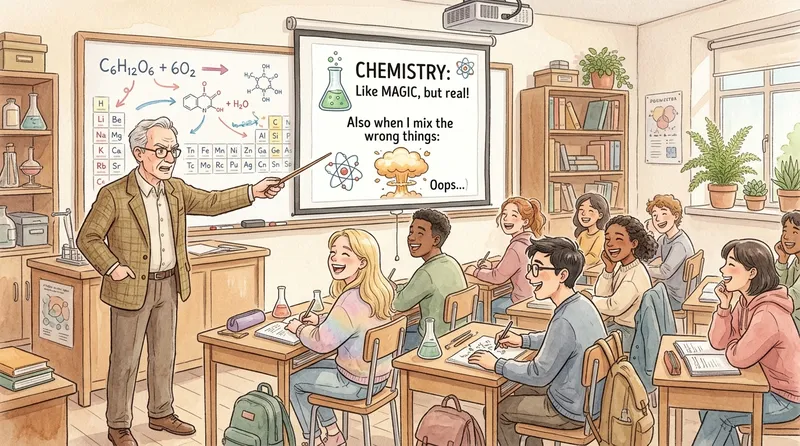
Professor Arvind Malhotra ko memes se zyada allergy sirf Monday mornings se thi—aur aaj Monday bhi tha, aur class WhatsApp group mein ek aur “sir, this is you” wala image circulate ho raha tha.
Usne apna phone table par rakh diya, jaise phone ne koi personal insult kar diya ho. Private university ka campus Gurgaon ke edge par tha—glass buildings, fake grass, over-polished corridors, aur har corner par coffee cup le kar chalne wale students. Arvind Malhotra ko ye sab modernity ka showcase lagta tha, par andar se usse bas ek hi cheez sukoon deti thi: black coffee, crisp attendance, aur ek aisi class jahan students uski baat ko poori seriousness se sunen.
Classroom mein woh hamesha time se pehle aa jata. Shirt ironed, shoes polished, aur voice mein woh exact amount of authority jo bina chillaye kaam kar jaaye. “Good morning,” woh bolta, aur students “morning sir” bolte hue bhi apne phones ko ek second ke liye neeche karte. Bas ek second. Usse lagta, duniya ka patience ab battery percentage ke saath chalta hai.
Aaj bhi lecture shuru hua. Topic tha, “Language, Power, and Public Discourse.” Arvind ne board par neat letters mein headings likhin, aur class mein woh familiar hum tha jo AC aur boredom ka joint product hota hai. Front row mein Sana Qureshi baithi thi, one earbud still hidden under her hair, face par woh expression jo har baat ko dekh kar already ek meme bana raha ho. Uske bagal mein do aur students phone screen ke neeche neeche hansi dabaa rahe the.
Arvind ne chalk rakh kar unki taraf dekha. “Something funny?”
“Nothing, sir,” teen awaazein ek saath aayin.
“Interesting,” Arvind ne dry tone mein kaha. “Because your faces suggest otherwise.”
Sana ne innocent expression banaya. “Sir, class is just… intense.”
“Intense,” Arvind repeated, jaise word ko taste kar raha ho. “And yet, your attention span is being murdered by Instagram reels and whatever else this generation calls humour.”
Back bench se kisi ne dhimi si khansi mein hansi chhupa li. Arvind ko pata tha ki woh hansi us par thi. Usne lecture continue kiya, par uske andar ek familiar irritation khulne lagi. Students ko lagta tha ki professor old-school hai toh automatically out of touch hoga. Aur professors ko lagta tha ki students ko bas data, memes, aur attention deficit hi aata hai.
Raghav, department intern aur teaching assistant, door ke paas khada tha. 24 saal ka, always neatly tucked-in shirt, laptop bag, aur woh kind of polite smile jo HR interview mein bhi kaam aa jaye. Arvind ko woh pasand tha, kyunki Raghav kaam bhi theek karta tha aur kabhi “sir, actually…” bol kar argument ko unnecessarily stretch nahi karta tha.
Lecture ke baad corridor mein Raghav ne laptop open kiya. “Sir, aaj ka reading material upload kar diya hai. Aur class WhatsApp group mein ek issue hai.”
Acchhi Lagi Kahani? Apne Doston Se Share Karna Na Bhoolen! 💖
Raghav thoda uncomfortable sa hua. “Actually… students ne ek meme share kiya hai. On… on you, sir. Nothing offensive. Just… light banter.”
Arvind ne seedha uski taraf dekha. “Meme?”
Raghav ne turant clarify kiya, “Sir, it’s just a joke format. Har cheez pe banate hain. It’s like—”
“Don’t explain,” Arvind cut in. “I know what a joke is. I don’t know why it needs a template.”
Raghav ne sirf smile kiya, par uski aankhon mein halka sa panic tha. “Of course, sir. Professional respect is important.”
Arvind ne us baat ko ignore kiya aur staff room ki taraf chal diya. Par “meme” word uske dimaag mein chipak gaya tha, jaise chalk dust shirt par. Us raat ghar jaake usne dinner khaya—plain dal, roti, aur ek silent kitchen jahan wife Priya ka kehna tha ki “aajkal tumhare students se zyada tumhara mood classroom jaisa ho gaya hai.” Priya ab city ke dusre end mein apni sister ke saath rehti thi. Arvind ne divorce ko kabhi loudly failure nahi bola, par uske ghar ki khamoshi us word se kam nahi thi.
Raat ko, jab woh apne study table par papers mark kar raha tha, phone vibrate hua. Department group se message aaya tha. Raghav ne galti se ya shayad anxiety mein, ek forwarded image us group mein daal di thi. Caption tha: “When professor says ‘this is important for exam’ and you know everything is important for exam.”
Neeche ek image thi—ek dramatic actor ka shocked face, aur text: “Me after attending 3 lectures and still understanding nothing.”
Arvind ne pehle sirf stare kiya. Phir usne image ko zoom kiya. Phir caption padha. Phir dobara image. Uske lips par ek almost invisible line bani—confusion ki, irritiation ki, aur kisi ajeeb si recognition ki.
Ye bas joke nahi tha.
Ye ek compressed complaint thi. Ek tiny, sarcastic, efficient sentence mein students ka poora mood tha: pressure, confusion, exhaustion, aur thoda sa rebellion. Arvind ko pehli baar laga ki meme ek lazy joke nahin, balki ek shorthand language hai—jaise students apni frustration ko safe packaging mein bhej rahe hon.
Usne aur do memes dekhe. Ek mein professor ka stern face stock photo tha aur caption: “POV: You asked one doubt and now your entire life is under review.” Dusre mein metro train ka crowded scene tha aur text: “Delhi-NCR students on their way to class after 4 hours commute and 2 existential crises.”
Arvind ne chashma utar kar table par rakha. Usse hansi nahi aayi, par ek strange softness zaroor mehsoos hui. Ye bachche sirf timepass nahi kar rahe the. Ye survive kar rahe the. Metro, traffic, assignments, internships, family pressure, internships ka fake “experience,” aur upar se self-image ka constant battle. Memes unka pressure valve the.
Next day, Arvind ne decided kiya ki woh bas observe karega. No judgment. No lecture. Bas dekhna hai ki ye meme culture kaise kaam karta hai. Usne Raghav se casually poocha, “Is there a place where one can understand these… formats?”
Raghav almost choke kar gaya. “Sir?”
“Meme formats,” Arvind repeated, as if discussing citation style. “I want to understand the logic.”
Raghav blinked twice. “Sir, you’re… interested?”
“Curious,” Arvind said. “There is a difference.”
Raghav ne laptop khola aur ek folder open kiya. “Okay sir, so this one is called ‘This is fine.’ Ye tab use hota hai jab sab kuch jal raha hota hai but person pretends normal hai.”
Arvind ne image dekhi—dog in a burning room, coffee cup in hand. He frowned. “That is absurd.”
“Yes, sir. That’s the point.”
Arvind ne dhyan se dekha. “So the humor is in denial.”
Raghav surprised hua. “Actually… yes.”
Arvind ne ek aur meme dekha. “And this? Why is a cat on a keyboard?”
“That means chaos, sir. No control.”
Arvind nodded slowly, jaise philology ka ek naya chapter khul gaya ho. Usne poora din students ke phone screens ko alag nazar se dekha. Sana kabhi group chat mein ek edited image pe smile karti, kabhi kisi friend ke low attendance joke par aankh ghuma deti. Usne realize kiya ki memes sirf entertainment nahi the; woh social commentary the, inside jokes the, aur kabhi-kabhi emotional camouflage bhi.
Phir disaster hua.
Ek seminar mein Arvind ne discussion start karte hue, thoda overconfident hokar bola, “As the meme says, ‘We were this close to greatness’—” aur usne fingers se ek dramatic gap dikhaya.
Class mein ek second ka silence.
Phir pehle ek student ne cough dabaya. Phir Sana ki lips twitch hui. Aur phir poori class mein woh hansi phail gayi jo disrespectful nahi thi, bas uncontrollable thi. Arvind samajh gaya ki kuch toh galat hua hai, par usne expression maintain karne ki koshish ki.
Sana ne haath uthaya, smile chhupaate hue. “Sir… that meme is used when someone almost did something, but failed badly. Aap yahan… success ke context mein use kar rahe the.”
Arvind ka face ek second ke liye blank ho gaya. Phir usne khud ko compose kiya. “I see.”
But class already laugh kar chuki thi. Kisi ne quietly “cringe” bhi bol diya, jo Arvind ne sun liya. Uska kaan garam ho gaya. Usne lecture crisp mode mein khatam kiya aur bina extra sentence ke room se nikal gaya.
Acchhi Lagi Kahani? Apne Doston Se Share Karna Na Bhoolen! 💖
Corridor mein Raghav uske peeche aaya. “Sir, it wasn’t—”
“Don’t,” Arvind said, voice low. “I know exactly what it was.”
Us raat Arvind ko embarrassment ne soya nahi. Usse laga ki usne students ke world mein step rakhne ki koshish ki, aur seedha floor par gir gaya. Authenticity ka mask toot gaya. Usne decide kiya ki ab ye experiment band.
Par agle din Sana ne office hours mein knock kiya.
“Sir, can I come in?”
Arvind ne usse chair di. Sana usual flippant mood mein nahi thi. Usne apna phone pocket mein hi rakha hua tha, jo itself unusual tha.
“Sir, about yesterday…” woh shuru hui.
Arvind ne lightly nod kiya. “You may speak freely.”
Sana ne thoda sa saans li. “Aapko lagta hoga hum log bas jokes aur distractions mein rehte hain. But honestly, memes are not always jokes. Kabhi kabhi woh bas itna bol dete hain jo hum directly bol nahi paate.”
Arvind ne uski taraf dekha. Sana ne aage kaha, “Like, if someone is failing, stressed, homesick, or just tired… meme bhejna easier hota hai than saying ‘I’m not okay.’ Because saying it straight feels… too much.”
Arvind ko uski voice mein ek aur layer sunai di—self-irony ke neeche chhupi hui thakan. Usse suddenly yaad aaya kaise Sana class mein sabse zyada has-ti thi, par answer dene se pehle ek second ruk jaati thi. Kaise woh har joke mein sharp thi, par kabhi kabhi uski aankhon mein ek doori hoti thi.
“Why didn’t you say this earlier?” Arvind asked softly.
Sana shrugged, but her eyes were serious. “Because serious log aksar mazaak ko shallow samajhte hain, sir. Aur mazaak karne wale logon ko serious nahi samajhte. So we keep switching masks.”
Arvind kuch der chup raha. Phir usne apni chair ka back thoda peeche kiya. “I have spent years believing language is about precision,” he said. “Correct grammar, correct context, correct meaning. But perhaps I ignored the fact that people also use language to hide pain.”
Sana ne first time bina joke ke uski taraf dekha. “Sir, aap old-school ho, but dumb nahi ho.”
Arvind ne almost smile kiya. “That is the highest compliment I have received from a student.”
Sana laughed, and the room ka tension halka ho gaya.
Uske baad kuch badal gaya. Dramatic nahi, cinematic nahi. Bas small shifts. Arvind ne class mein phone ko enemy ki tarah treat karna kam kar diya. Usne ek lecture mein students se poocha, “If a meme can explain a social issue better than a paragraph, what does that say about public communication?” Class ne first time genuinely engage kiya. Sana ne ek meme projected kiya—without offensive content—and explained how irony can expose power structures. Raghav side mein khada tha, visibly relieved that this was now academic and not a trap.
Phir Arvind ne assignment diya: “Create one meme that captures a communication gap in contemporary society, and write a brief analysis of why it works.” Class mein murmurs uth gaye—half excitement, half disbelief.
Sana ne hand raise kiya. “Sir, are you… allowing memes as coursework?”
Arvind ne deadpan mein kaha, “I am allowing critical thought in a format you apparently find less traumatic.”
Poora class has pada, this time with affection.
Metro ride ke ek din, Arvind ne apne reflection mein khud ko dekha—crowded coach, Noida side ki traffic lights, aur saamne ek college student jo phone par meme scroll karte hue softly smile kar rahi thi. Arvind ne uske screen par nazar daali aur pehli baar bina prejudice ke us caption ko read kiya. It was a joke about internship rejections, but the way the girl smiled told him it was also a survival note.
Usne samajh liya: understanding ka matlab same words bolna nahi hota. Kabhi kabhi it means noticing what the other person is trying not to say.
Final week mein seminar hall mein presentation tha. Sana aur uski team ne “Meme as Modern Folk Language” par presentation diya. Arvind front row mein baitha tha, arms folded, but expression softer than usual. Presentation ke end mein Sana ne ek slide khola—simple, clean, and funny. On it was a meme about “strict professors discovering student humor.” Audience laughed. Arvind bhi has diya, chhota sa, genuine.
Sana ne mic mein kaha, “Some teachers think students don’t pay attention. But sometimes hum itna attention dete hain ki hum unki tone, pauses, aur moods tak read kar lete hain. Aur kuch teachers… students ko pehle hi label kar dete hain. The gap isn’t age. It’s attention.”
Hall mein ek beat ka silence hua. Phir applause.
Arvind ne us din applause ko sirf appreciation nahi, correction bhi maana.
Presentation ke baad corridor mein usne Sana ko roka. “Your point was well made.”
Sana smiled. “Thank you, sir. Aapne bhi surprisingly… not cringe response diya.”
Arvind ne eyebrow lift ki. “Surprisingly?”
“Sir, no offense,” she said, grinning.
Arvind ne faint smile ke saath apna phone nikala. “I have something for you.”
Sana’s eyes widened. “Sir, please don’t say you made a meme.”
“I did not make a meme,” Arvind said, very serious. “I merely forwarded an image.”
Acchhi Lagi Kahani? Apne Doston Se Share Karna Na Bhoolen! 💖
He showed her a screenshot from the class group. It was a simple stock image of a man in spectacles looking stern, with the caption: “When you finally understand your students’ jokes and realize they were speaking in emotional shorthand all along.”
Sana stared. Then she laughed so hard she had to hold the corridor wall.
“Sir,” she managed, “this is… actually cute.”
Arvind looked mildly offended. “Cute is not the word I was aiming for.”
“Still counts,” Sana said.
Raghav, who had been standing nearby, looked at the phone, then at Arvind, then at Sana. “Sir, honestly… I think you’ve become the most unexpected person in this department.”
Arvind slipped the phone back into his pocket. “Raghav, that is the first honest thing you have said in months.”
Raghav laughed, finally dropping the polished-professional act. “Sir, I have been waiting for permission.”
By the time semester ended, Arvind Malhotra was still strict. He still expected deadlines, citations, and proper punctuation. He still frowned at sloppy answers and loved a well-structured paragraph more than any reel. But now, when a student looked tired and cracked a joke instead of speaking directly, he didn’t dismiss it immediately. He looked twice. He listened for what was underneath.
And Sana, who had once thought professor log sirf old-fashioned aur unreachable hote hain, now knew better. Respect ka matlab apni language chhod dena nahi hota. It meant recognizing when the other person is trying—awkwardly, imperfectly, but sincerely—to meet you halfway.
One evening, as the campus lights blinked on and the chai stall near the gate filled up with students, Arvind stood with a paper cup in his hand. Sana and her friends passed by, laughing over some new meme he didn’t yet understand. He didn’t interrupt. He just smiled, a little to himself.
Because now he knew: every generation has its own grammar of survival.
Aur kabhi kabhi, ek meme bhi ek sentence hota hai—bas thoda zyada honest, thoda zyada compressed, aur thoda zyada human.
---
Thank you for reading this story on storydilse. Aapka pyaar aur support hi humein aise relatable, warm, aur dil se likhe gaye stories banane ki inspiration deta hai. Umeed hai Professor Arvind aur Sana ki ye journey aapke dil ko chhoo gayi hogi. Phir milte hain ek aur kahani ke saath—tab tak, khush rahiye, muskurate rahiye, aur thoda sa meme bhi samajhte rahiye.